← HomeThe person with the questions

Sreekar

I like electronics, small experiments, and finding out how the pieces fit. I write about electronics, code and what I learn while building things.

NOTE
Kindred Hands

Who is going to upload the saree?

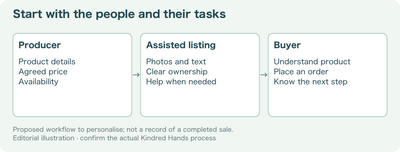
I offered to upload the products myself. That was a practical part of Kindred Hands, not just a feature on a website. In Pochampally, the first conversations did not turn into participation as quickly as I expected. After about a week, only one initial contact had sent photographs and descripti

·3 min read
NOTE
TinyML

Why does the model look better on the screen than through the microphone?

The live microphone results were less encouraging than the validation screen. That made the route into the classifier more interesting to me. A model file does not receive the word ON as a meaning; it receives a representation of the captured sound. The laptop recordings and the INMP441 stream

·5 min read
NOTE
Converters

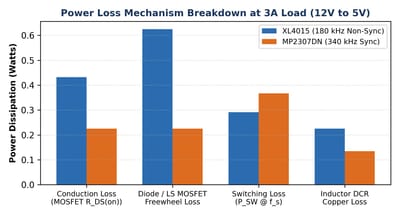
A converter can work and still have a heat problem

The thermal question begins inside the power calculation. The converter study separates high-side conduction, the diode or low-side path, switching loss and inductor copper loss. Those give me particular places to look for power that does not reach the load. Heat is therefore part of understand

·4 min read
NOTE
TinyML

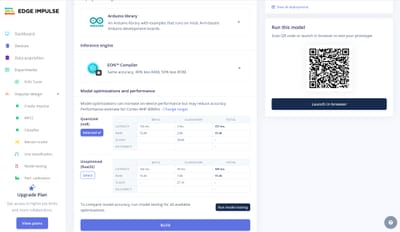
Three milliseconds sounded great, until I read the target name

I timed the classifier on the ESP32-S3: 3 ms for INT8 and 35 ms for floating point. Three milliseconds felt quick, but the feature-processing stage still needed attention. I kept its timing separate from the classifier so I could see where the complete processing pass spent its time.

·4 min read
NOTE
Converters

The note I want to find when I reopen this project

A value in microhenries is not a complete converter note. It needs the question that produced it. The report gives a useful example of why: the benchmark heading says 12 V down to 5 V at 3 A, but one calculation uses 3.3 V, and the ripple allowances are 1.5 A and 0.9 A. Keeping only the answers

·3 min read
NOTE
TinyML

The big percentage was not the most interesting thing on the screen

The validation screen gives 88.2% accuracy and a loss of 0.28. The confusion matrix makes the result more particular: the OFF and ON rows are in their correct columns, while the noise row is split equally between ON and noise. That’s the part I want to understand before treating the overall per

·4 min read
NOTE
Converters

One change I can actually follow: the switching frequency

I’m keeping the ideal question fixed so I can follow one change: switching frequency. The calculation is 12 V input, 5 V output and 0.9 A peak-to-peak inductor-current ripple. With those conditions held still, the duty ratio is 5/12, and the report's equation gives about 18.0 microhenries at 18

·3 min read
NOTE
TinyML

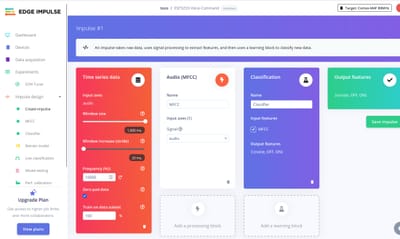
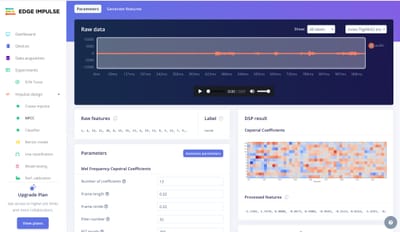
Trying to understand the part between the sound and the model

The MFCC block has definite settings: 13 cepstral coefficients, 20 ms frames, a 20 ms stride, 32 filters and a 256-point FFT. Its output is a 650-value feature representation, while the audio window begins with 16,000 raw samples at 16 kHz. Those are different stages of the route from sound to

·4 min read
NOTE
Converters

The two words beside the efficiency figure

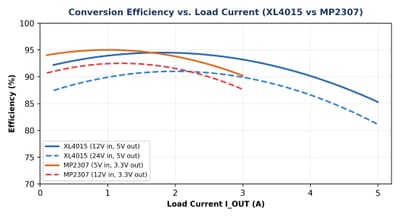
I compared the two converters on the bench and recorded peak efficiencies of 96% for the XL4015 and 95% for the MP2307DN. Keeping the input, output and load conditions beside each reading helped me understand why the percentages changed across the sweep.

·4 min read
NOTE
Power meter

Three sets of calibration values, and no simple story yet

The calibration pairs are literal differences between saved versions. The report and smaller RMS sketch contain 769.0 and 0.85. The final-named file contains 766.0 and 0.85, while another copy contains 625.0 and 30.0. I can compare those actual values without assuming that three files represent

·3 min read
NOTE
TinyML

A hundred recordings become one minute and forty seconds

The dataset view contains 100 one-second clips: one minute and forty seconds of sound. The split is 82 training examples and 18 test examples. That’s a concrete scale I can think about, rather than simply calling the dataset small or large. Each second is one of the examples behind the patterns

·4 min read
NOTE
Converters

Following the loss through the diode

The off-state path gives me a particular place to follow power loss. In the XL4015 example, current passes through the freewheeling diode. In the MP2307DN example, a controlled low-side MOSFET conducts. The useful comparison is between a forward-voltage-drop term and a resistance term, with the

·4 min read
NOTE
TinyML

Before I blame the model, what did the microphone send it?

The microphone test has a smaller job than the classifier. Its code sets 16 kHz, 32-bit left-channel I²S, with word select on GPIO 15, data on 16 and clock on 14. It reads blocks into an int32 buffer, then prints a value called SoundLevel. Before treating that number as evidence about a word, I

·3 min read
NOTE
Converters

The maths was fine. I was comparing different questions.

The heading says 12 V down to 5 V at a 3 A load. Then the MP2307 calculation uses 3.3 V, while the XL4015 calculation uses 5 V. The current-ripple allowances change too: 1.5 A in one example and 0.9 A in the other. Before I compare the final inductor values, I need to notice that the questions

·3 min read
NOTE
Converters

How five divided by twelve became a much bigger question

The calculation is 5 divided by 12, about 0.417. I’m using an ideal buck-converter example with 12 V at the input and 5 V at the output. The duty ratio is the fraction of a cycle for which the main switch is on. The division is easy; the reason the fraction belongs to the voltage is what I want

·3 min read